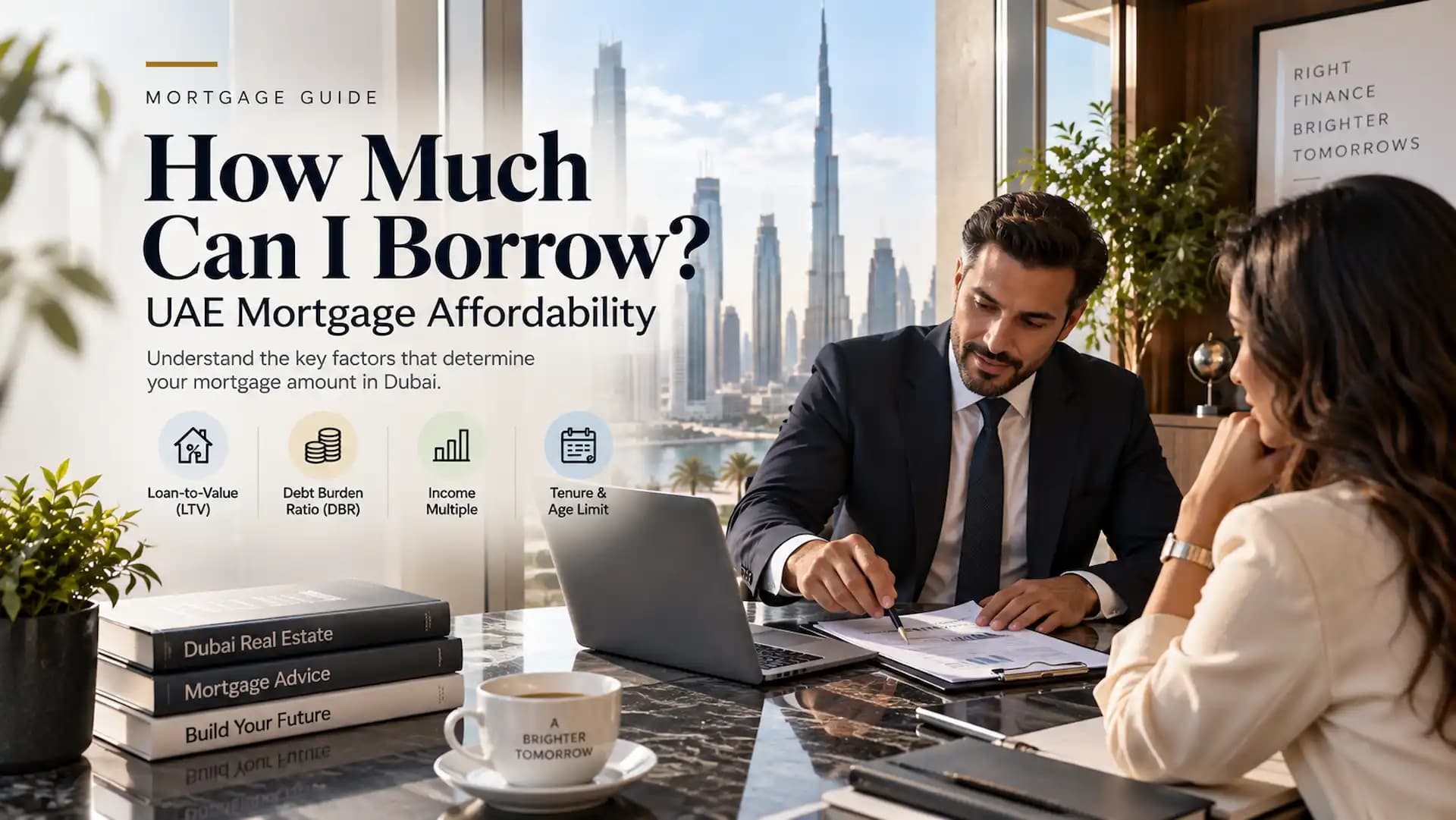
When people hear “Islamic mortgage,” they often think it’s a totally different world from a normal mortgage. In reality, the monthly payment can feel similar — but the structure behind it is different.
In the UAE, Islamic banks usually don’t “lend money with interest” for homes. Instead, they use Sharia-compliant home finance where the bank’s earnings come through a sale, a lease, or a partnership tied to the actual property.
So the big difference is this:
Conventional mortgage: money is loaned → interest is charged
Islamic home finance: asset is bought/leased/shared → profit or rent is earned
Let’s break it down in the simplest, most practical way.
Speak to a UAE home finance specialist — no pressure, no jargon.
The Big Idea: You’re Not Paying Interest — You’re Paying Profit
Sharia compliance is mainly about how the deal is structured:- The financing must be linked to a real asset (your home)
- The bank’s return must be transparent and agreed
- The contract avoids pure interest-based lending
3 Most Common Islamic Home Finance Structures in the UAE
1) Ijarah (Lease-to-Own) — the “rent with a plan” model
This is one of the most common formats in UAE Islamic banks. How it feels for you: You live in the home and make monthly payments. What’s happening in the contract:- The bank buys the home (or participates in buying it)
- You “lease” it from the bank
- Your payment includes:
- a rental/profit portion (the bank’s earnings)
- a portion that gradually moves you toward ownership (structure varies by bank)
2) Diminishing Musharakah (Declining Partnership) — the “co-own then buy out” model
This one is easy to understand if you think of it like a partnership. How it feels for you: You and the bank start as co-owners, and over time you buy the bank out. What’s happening in the contract:- You own a share, the bank owns a share
- Every month you:
- buy a bit more of the bank’s share
- pay rent for the portion you don’t own yet
3) Murabaha (Cost-plus Sale) — the “bank buys, then sells to you” model
This model is more like a structured purchase than a partnership. How it works:- You choose the property
- The bank buys it
- The bank sells it to you at a known price: cost + bank profit, paid over time
What the Process Looks Like (In Real Life)
Even with different structures, the customer journey usually follows a similar path:Step 1: Pre-approval (your reality check)
This is where the bank checks:- your income and employment stability
- existing debts
- credit history in the UAE
- affordability limits
Step 2: Property selection + valuation
Once you choose a property, the bank usually orders a valuation. This protects the bank, and it also impacts:- how much they will finance
- whether the property is acceptable under their criteria
Step 3: Offer letter + contract structure
This is where the bank confirms:- the Islamic structure (Ijarah / Musharakah / Murabaha)
- the profit rate type (fixed/variable)
- repayment term
- fees and conditions
Step 4: Transfer + registration
This stage includes:- government registration (varies by emirate)
- mortgage registration (if applicable)
- final documentation and disbursement
What You’ll Pay Every Month!
A common question is: “If there’s no interest, why does my rate change?” Because many UAE Islamic home finance products still use a benchmark (market reference) to price the bank’s profit/rent — especially for variable-rate plans. So while the contract avoids interest, the pricing can still follow market movements.Fixed vs variable — quick practical view
- Fixed for a few years: more predictable budgeting early on
- Variable: can be cheaper at times, but exposure rises when the market rises
Costs People Forget (That Can Hurt the Budget)
Most buyers plan only for “down payment + monthly payment.” But UAE property buying has extra layers. Common cost buckets include:- bank processing / arrangement fee
- property valuation fee
- insurance / takaful
- government registration fees
- mortgage registration fees (if applicable)
- agent fees (if you’re using an agent)
Common Misconceptions
“Islamic mortgages are always cheaper.” Not necessarily. Islamic can be competitive, but pricing depends on:- your profile
- property type
- term
- bank’s risk appetite
- market rate environment
The 7 Questions Smart Buyers Ask Their UAE Bank
If you want to avoid confusion (and surprises), ask these:- Which Islamic structure is this? (Ijarah / Musharakah / Murabaha)
- Is the profit rate fixed or variable — and for how long?
- What is the total upfront cash required (all fees included)?
- What happens if I settle early? Any settlement charges?
- How is the monthly payment calculated? (what changes, what doesn’t)
- Is the property eligible under the bank’s criteria?
- What documents do you need from me — and what causes delays?
A Simple Way to Decide If Islamic Home Finance Is Right for You
Choose Islamic home finance if:- Sharia compliance matters to you
- you want a structure based on an asset (sale/lease/partnership)
- you prefer transparent contract terms over “interest language”
Closing Thoughts:
If you’re buying in the UAE, Islamic home finance is not “complicated” — it’s just contract-driven. Once you know whether you’re leasing, co-owning, or buying at markup, everything becomes clearer. If you want, paste one bank offer (even just the main terms), and I’ll rewrite it into plain English so you can explain it to a client like a pro — plus I’ll highlight hidden cost areas and questions to ask.Contact Credit LInk:
Book a Free 15-Minute Mortgage Call!Speak to a UAE home finance specialist — no pressure, no jargon.